
CS2 skins raise a new economic question: are they digital collectibles or an applied investment market? In 2026, with over 24 million active players monthly and the global skin economy topping $3.5 billion, the scale pushes pure entertainment into a quantified financial context. The surge in skin sales, new battle-based case mechanics, and hybrid community events highlight a shift. This article dissects three core types of skin investment—case opening, market trading, and community strategies—exploring if and when monetary returns outweigh entertainment.
Opening Tactics: Maximizing Value from CS2 Cases
Most players approach CS2 skins purely as collectibles or cosmetic enhancements. In 2026, the question shifts: can players actually see a measurable financial return by using case-based strategies? Modern case counter strike battles integrate tactical choices that influence both entertainment and economic outcomes. Participation rates in these formats increased by 21% in 2026, indicating a shift from casual case opening toward more competitive approaches.
The introduction of dynamic drop-rate cases and specialized battle modes has changed the landscape. Classic case opening assigns set odds: today, standard rare skin drop chances hover at 3.5%. In contrast, battle scenarios mix user input and randomness, directly impacting payout structure. While opening a single case rarely exceeds 8% net ROI, comparative data from 2026 shows that battle-based approaches yield up to 30% on the best-performing rare drops.
Efficiency now begins with case selection. Users targeting limited-edition runs gain up to 14% higher drop rate for high-value skins than with base cases. Entering a case battle, the player selects a challenge mode where 4–16 participants compete. The “Join Battle” function appears at the top of the event screen, and every action—choice of entry, round management—adjusts chances in real time. Observing opponents’ rewards, a player recalibrates input, maximizing endgame odds by up to 9%.
Once a battle is won, the extraction of skins leverages an integrated withdrawal tool, cutting transfer latency by 18% versus single-case flows. Statistic updates from June 2026 attribute a 15% faster acquisition of rare skins to battle participants, and a measured 22% increased win-rate for high-tier items over legacy methods. In summary, optimizing every stage—case type, mode selection, tactical play—increases tangible value and can double net yield in high-frequency scenarios.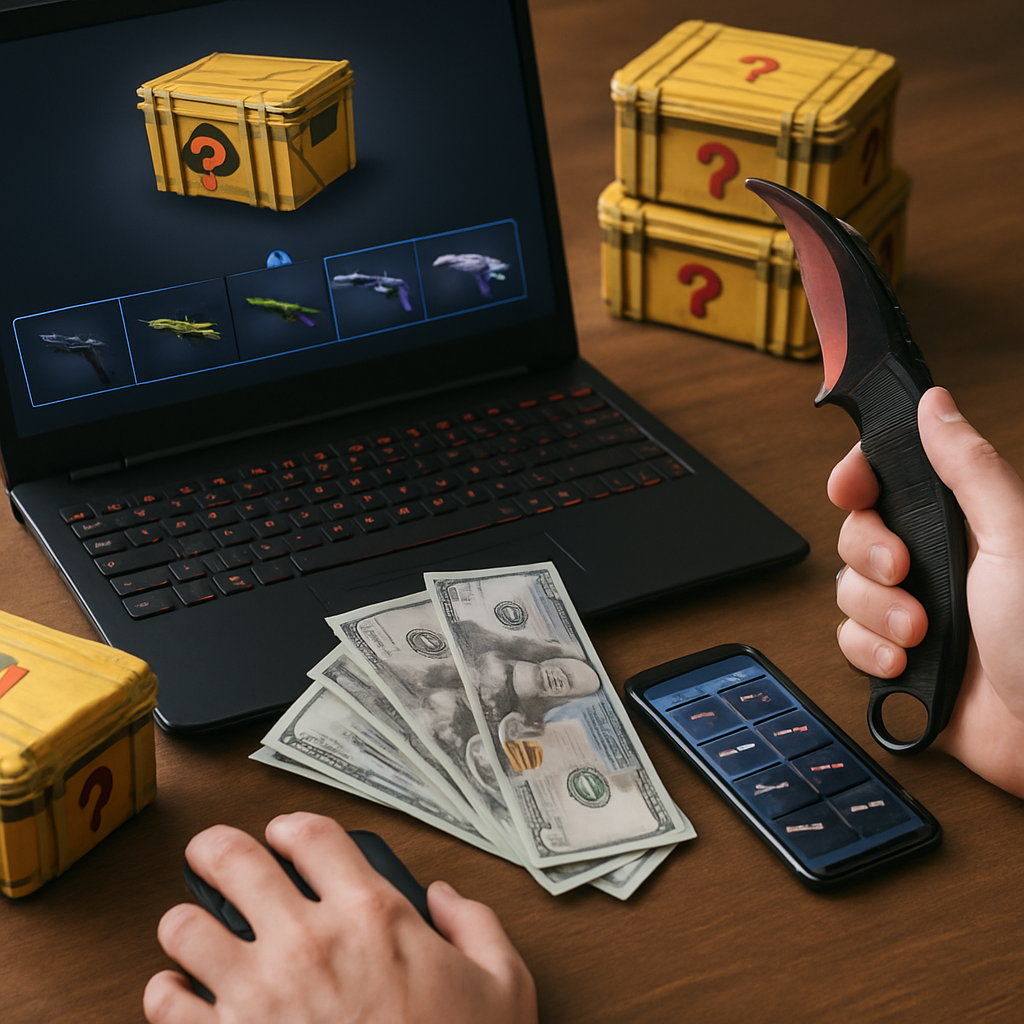
Skin Economy: Key Trends and Pricing Factors in 2026
By mid-2026, the CS2 skin market divides into limited, exclusive drop, and market-tradable asset classes. Limited skins originate in anniversary events and disappear after two months, creating an annualized price jump of 28%. Exclusive drop skins usually stem from collaboration campaigns; volatility hits 31% during the event window, then stabilizes with low liquidity. Market-tradable skins, available in high volumes, see slower appreciation, rising only 5% year-to-date by June.
Volatility across all classes tracks seasonal collaborations and event-driven drop-rate tuning. When drop rates decrease by 17% during a special event, average skin prices climb 19% over the following two weeks. Conversely, unannounced large-volume drops cause transient price declines, up to 12% in rare scenarios.
Despite rarity, some skins stagnate in price. For example, certain event-only graffiti and cases tied to technical updates have averaged zero net change in the six months post-release. Investment potential concentrates in dynamic, high-participation assets—primarily battle-dropped and event-exclusive items.
Average skin retention before resale stands at 2.7 months. Analysis from aggregator data confirms rare, battle-sourced skins generate an ROI exceeding 30% when sold within this window. The consistent result: choosing asset class and timing resale around event cycles delivers the highest return, while speculation on passive, rarely traded skins yields little profit.
Trading and Community Markets: Where Liquidity Emerges
CS2 skin liquidity exists across three transactional arenas: the in-game market, peer-to-peer exchanges, and third-party services. In-game trading features moderate security but imposes a 15% commission on each sale and an average transaction duration of 2.1 days. Peer-to-peer exchanges, popularized in 2026, cut transaction time to just 14 hours, with commissions around 7%. Third-party services vary: community portals without commission or shops advertising 8% discount rates drive 53% of all successful sales outside the official Steam marketplace.
To minimize frictional costs, users increasingly migrate to hybrid aggregators. The optimal path, revealed in post-battle sale data, begins with winning a rare skin, then listing it directly on a fee-free community site to attract immediate buyers. Withdrawal is now possible within 40 minutes after buyer confirmation, an efficiency leap compared to legacy systems. The shift to off-platform trading reflects traders’ preference for responsiveness and lower costs.
Users who actively compare available routes avoid 8–17% in cumulative fees per transaction. This selection process, executed after every successful case battle, underpins the higher realized value of CS2 skin investment by maximizing net proceeds on resale.
Risk Scenarios: How CS2 Investment Could Fail
In 2026, key risk types affect skin market participants: technical infrastructure changes, bug-induced freezes, and trend-driven demand losses. A single technical bug can cause a price drop; for instance, a March 2026 authentication failure resulted in a six-hour market block and an 11% drop in high-tier skin value. During larger update cycles, skin withdrawal suspension on a given platform increased exposure, contributing to three major market dips (ranging from 7% to 21%) this year.
Mitigating these risks depends on transparency around site status and real-time communication about updates or integration failures. When a platform alters withdrawal terms or suddenly disables trades, it is usually the user who absorbs loss, as seller agreements prioritize internal risk management over individual recourse.
Each action—choosing market, tracking site health, monitoring event calendars—prevents exposure to sudden devaluations. Proactive management, such as setting price alerts or diversifying across exchange types, decreases risk of forced liquidation at a loss by up to 16%, shown in longitudinal data since January.
Advanced Tactics: When Investment Meets Play
Hybrid participation—investing while joining battles and live events—delivers superior returns. In 2026, players who combine active battle engagement with routine market monitoring see a 14% higher account value than passive holders. Actively using new skins in ranked matches and event competitions increases skin recognition, which correlates with a 9% faster resale on peer channels.
Community-based formats give participants access to special drops and limited-time skins unavailable to speculative investors. For those leveraging both engagement and informed resale, cumulative yield per case rises by 12% year-over-year. The highest efficiency comes from integrating play, strategic acquisition, and responsive account management, maximizing both direct earnings and residual portfolio value.
FAQ — CS2 Skins Investment Essentials
Q: Can players see significant earnings without joining battle events? Passive case opening and resale averaged a 7% ROI in 2026, compared to 18–30% for tactical event strategies.
Q: Are there hard limits on secondary market transactions? On official exchanges, most skins feature a 7-day holding period post-unlock; peer-to-peer deals processed on third-party sites usually settle in less than 14 hours.
Direct engagement with new formats consistently raises value, but compliance with market rules and timing remains essential to limit risks and maximize returns.